
Capability meets craftsmanship.
Explore the processes behind our precision sheet metal components, fabricated enclosures and custom assemblies.
Our manufacturing capabilities
From sheet metal to finished assembly.
Explore eight stages of fabrication and manufacturing support. Share your drawings with our team to confirm materials, process availability and project scope.
Images are AI-created illustrations of the processes shown.
01 / Manufacturing capability
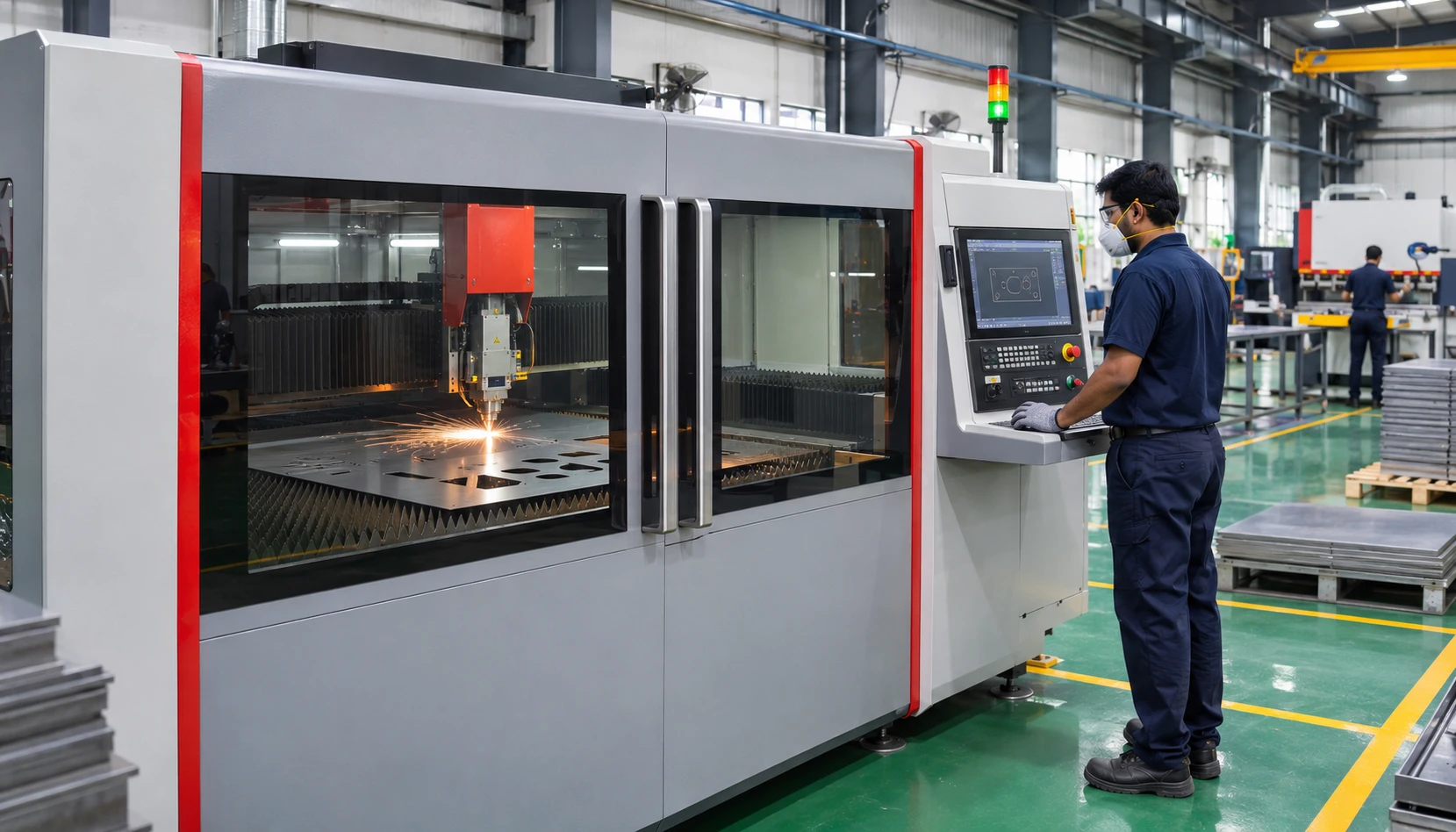
CNC Laser Cutting Machine
Laser cutting creates profiles and cut-outs in sheet metal.
Customer drawings guide the component shape and feature layout.
Material type and thickness are reviewed before production.
The cutting route is selected to suit the design and application.
Cut edges and critical features are checked against agreed requirements.
Contact our team to confirm availability and the manufacturing scope.
02 / Manufacturing capability
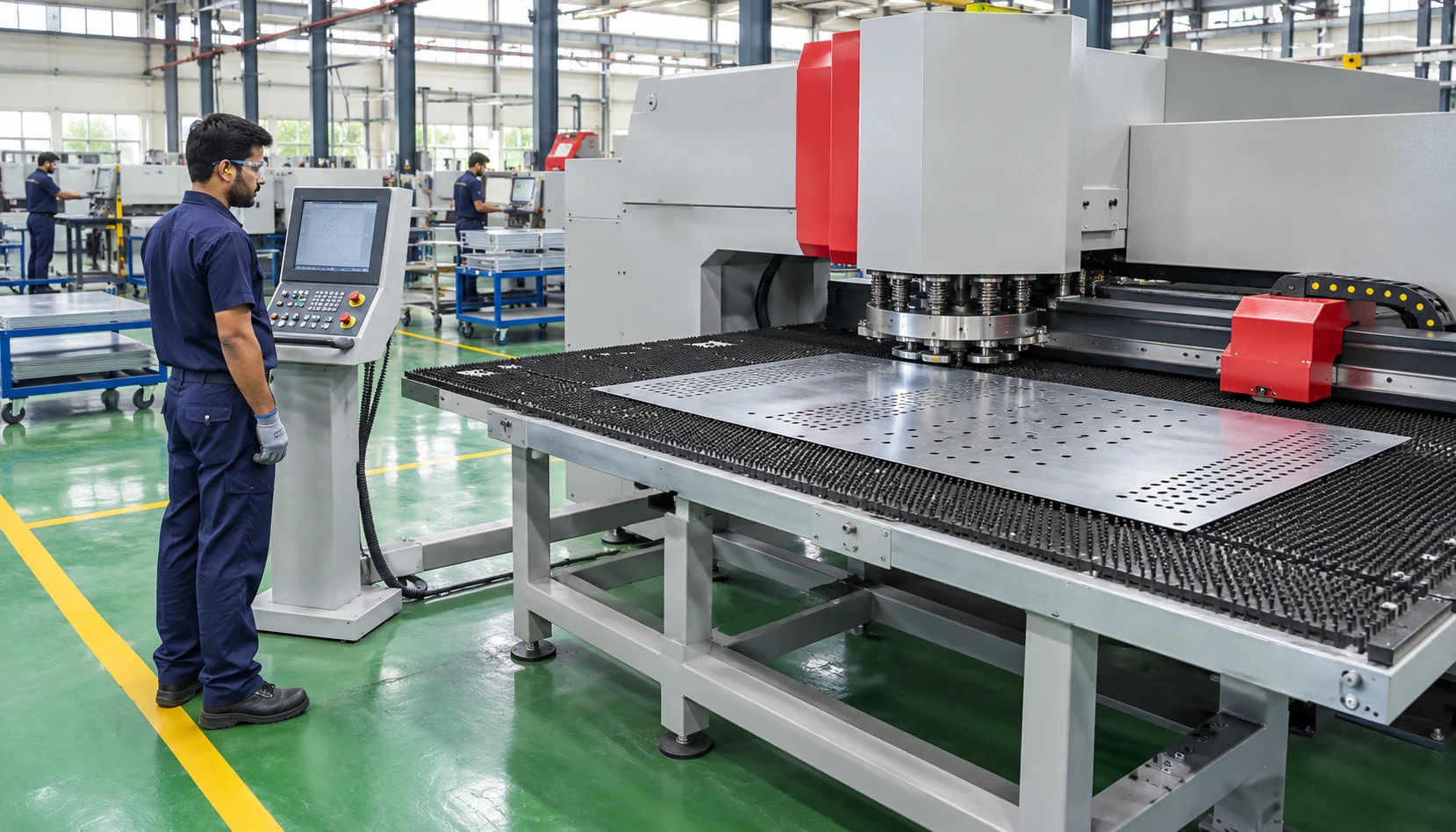
CNC Punching
CNC punching produces holes, slots and repeated sheet metal patterns.
Tool selection is planned around the component drawing.
Suitable features can be combined within a practical punching sequence.
Sheet layout considers material use and downstream forming.
Panels, trays and face plates are common applications.
Share your drawing and quantity to discuss a suitable solution.
03 / Manufacturing capability
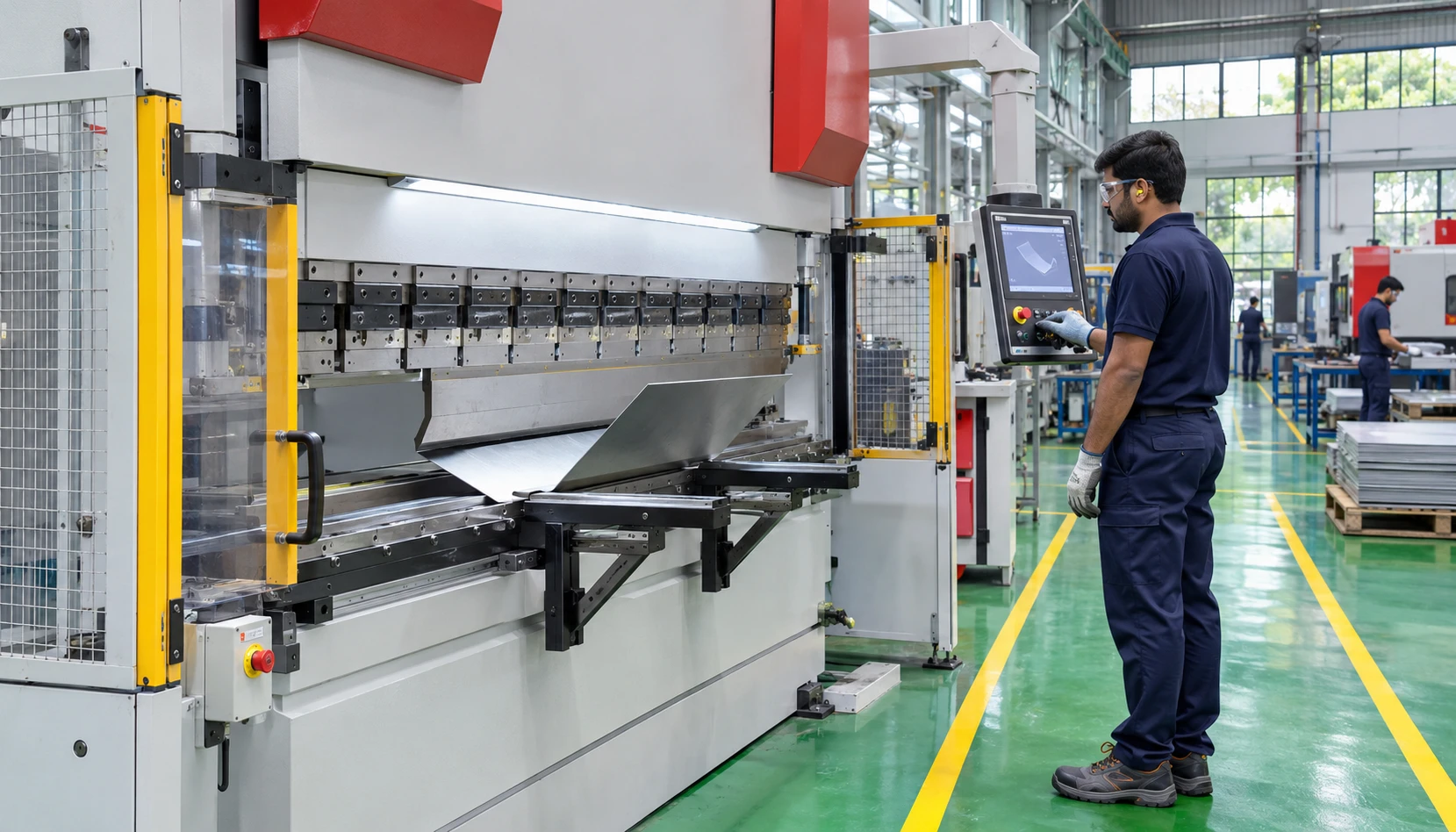
CNC Bending
Press-brake bending turns flat sheet into functional formed parts.
Bend positions and angles follow the agreed component drawing.
Material, thickness and bend sequence are reviewed together.
Flanges and folds are planned around assembly requirements.
Cabinets, brackets, covers and channels use formed features.
Our team can review your dimensions and fabrication requirements.
04 / Manufacturing capability
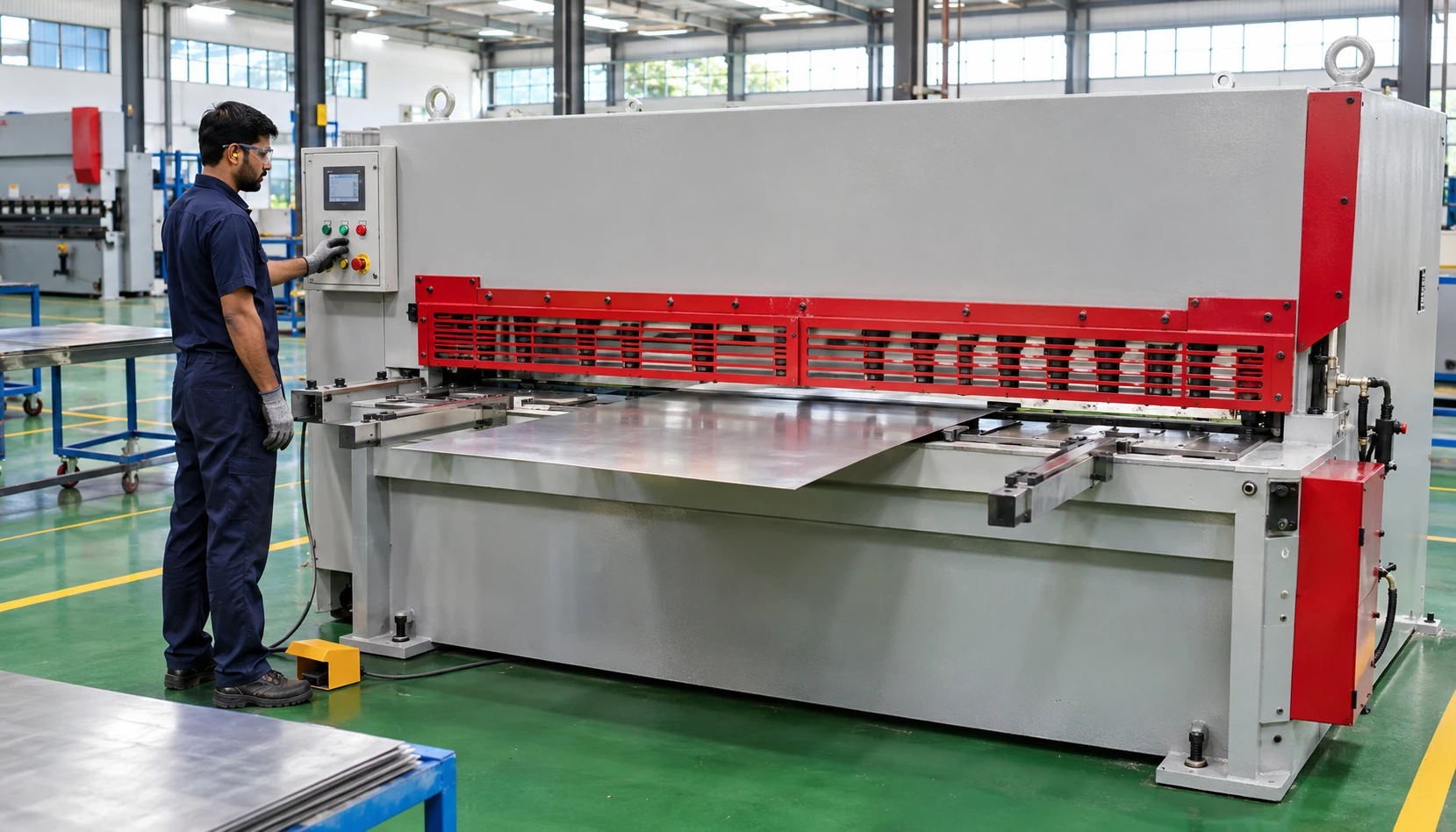
Sheet Metal Shearing
Shearing prepares straight-edged blanks for fabrication.
Required lengths and widths guide the cutting layout.
Material and sheet thickness determine the suitable process.
Prepared blanks support punching, bending and further assembly.
Cut dimensions are reviewed against the agreed requirements.
Discuss your material, blank sizes and quantities with our team.
05 / Manufacturing capability
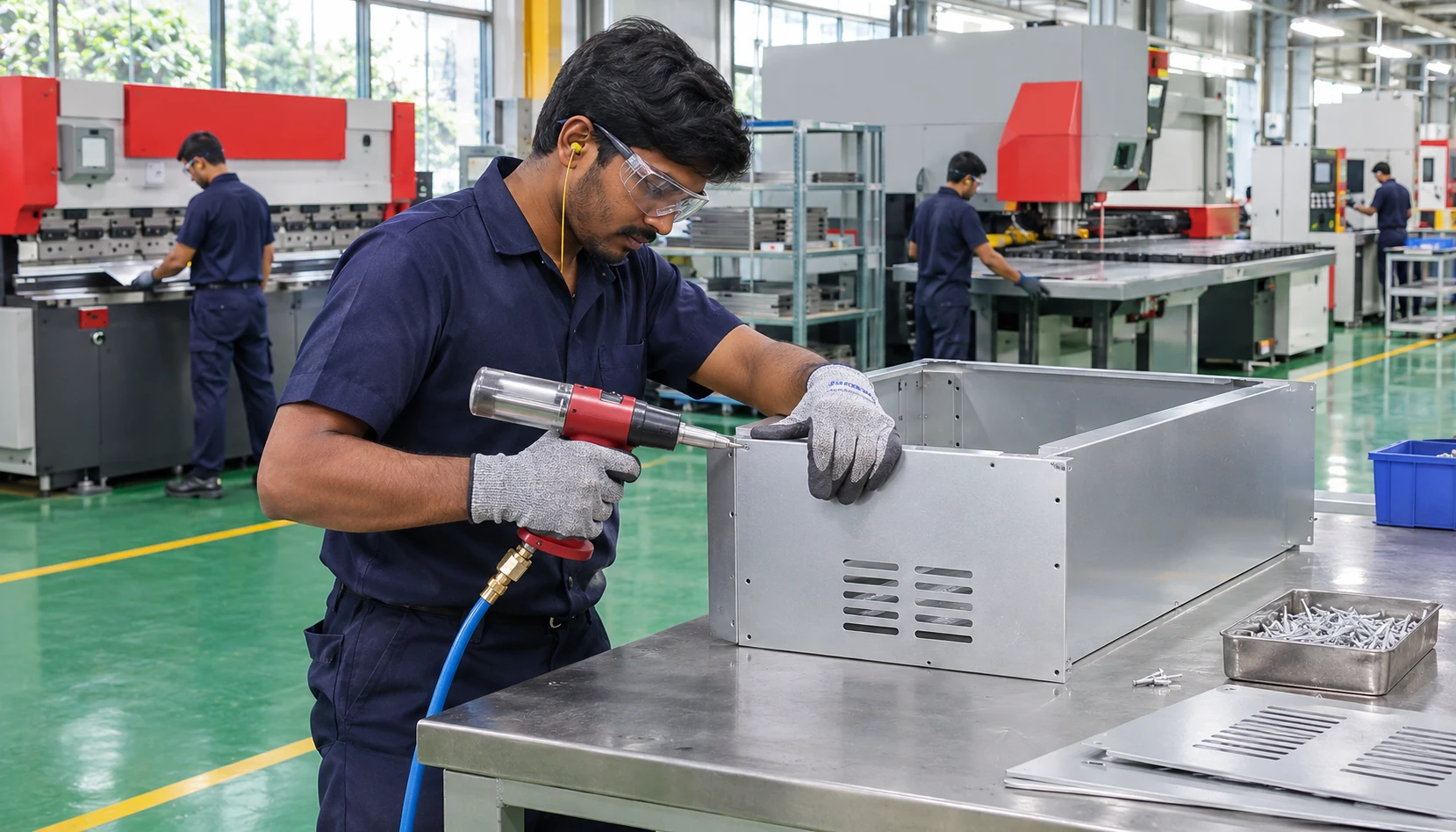
Riveting
Riveting joins sheet metal components using mechanical fasteners.
Hole locations and fastener selection depend on the joint design.
The assembly layout is reviewed for access and practical installation.
Riveted joints can support panels, brackets and enclosure assemblies.
Fit and fastening requirements are agreed for each project.
Contact us to discuss riveting within your fabrication scope.
06 / Manufacturing capability
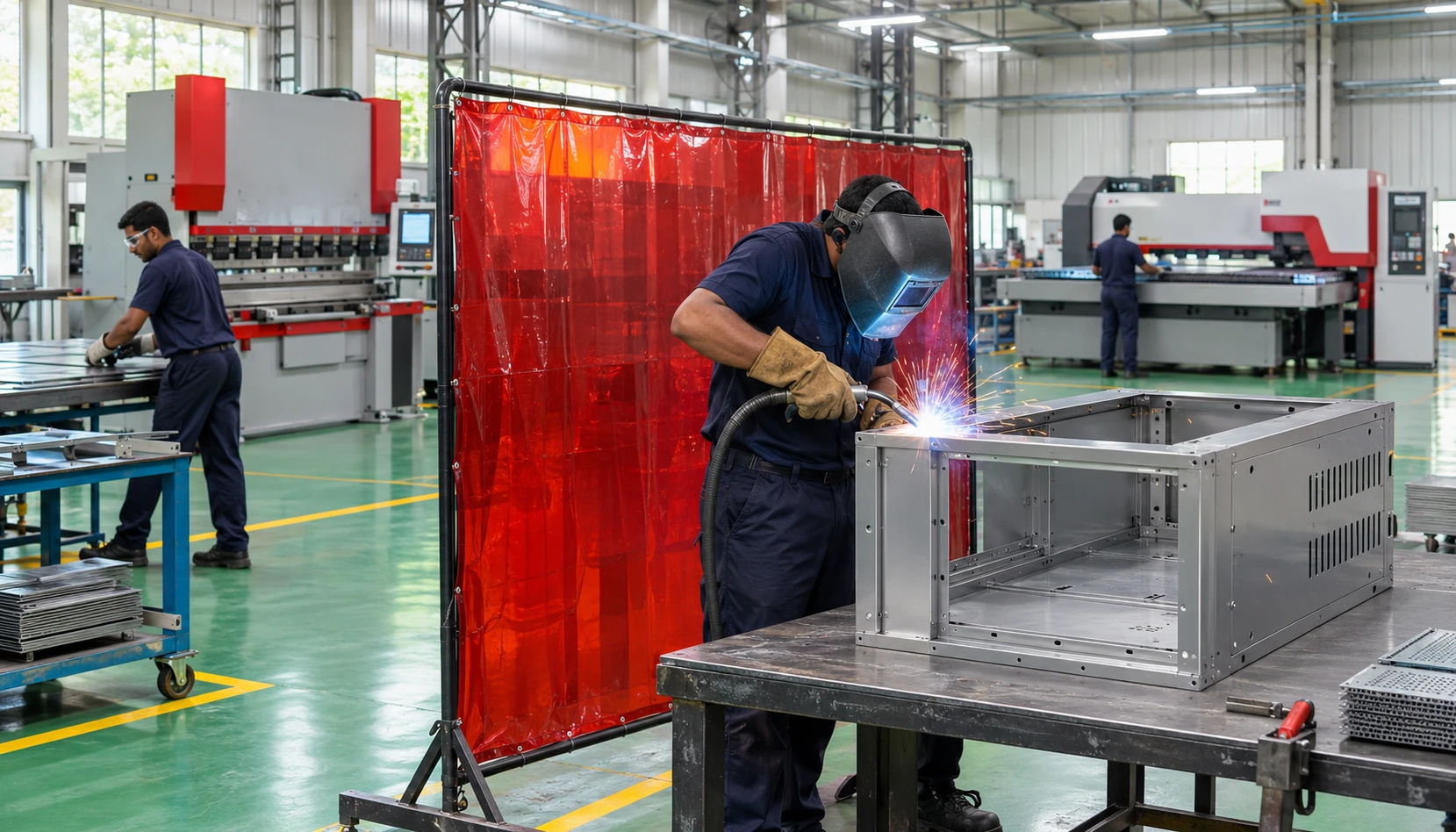
Welding & Fabrication
Welding brings individual metal components into a joined assembly.
Joint locations and preparation follow the fabrication requirement.
Material compatibility and the intended use guide process selection.
Frames, supports and cabinet assemblies are common applications.
Workmanship and assembly fit are reviewed during fabrication.
Share your drawings to discuss the welding and finishing scope.
07 / Manufacturing capability
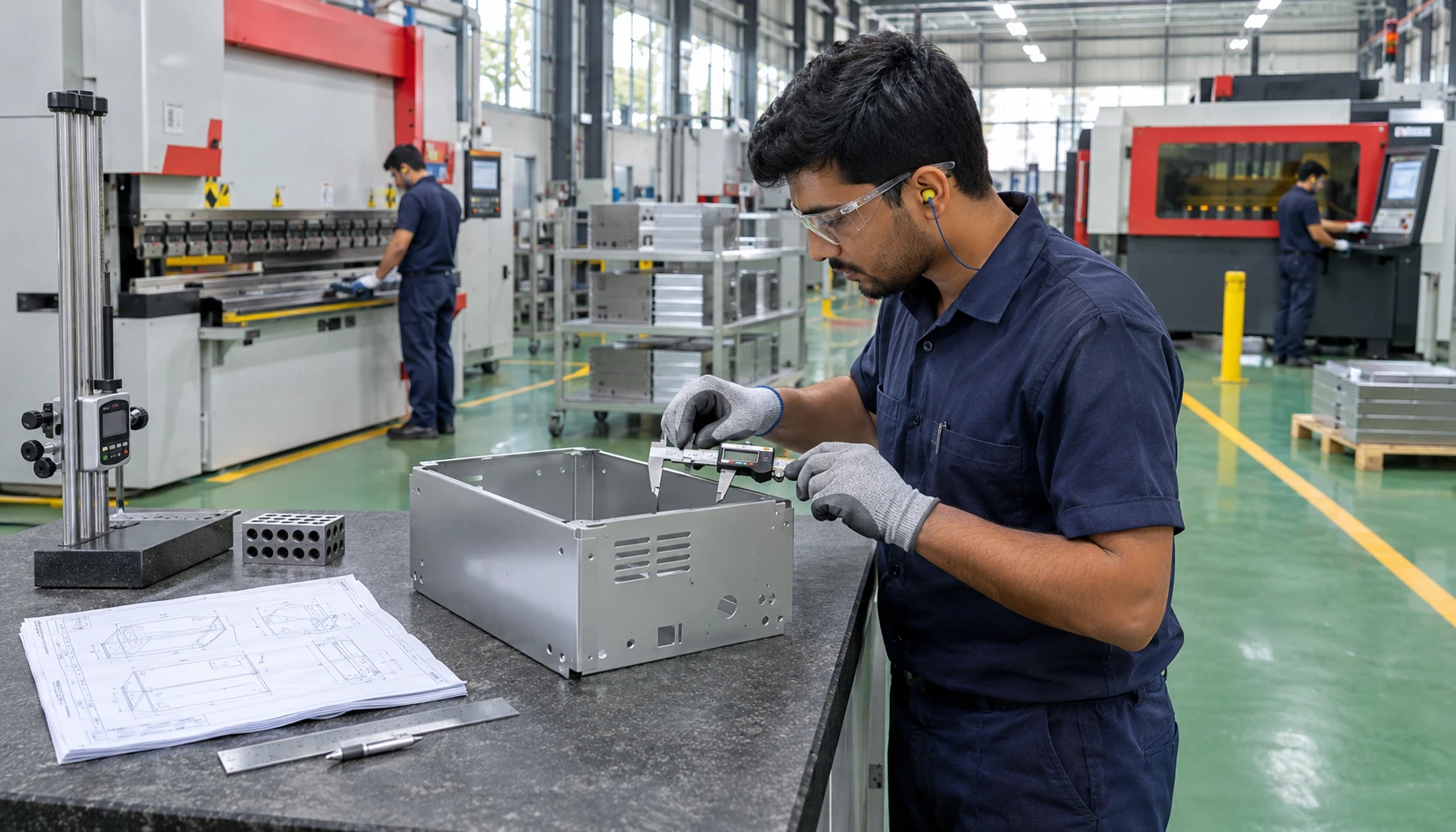
Quality Checking
Quality checking begins with understanding the customer requirement.
Relevant dimensions are checked against the agreed drawing.
Hole positions, formed features and assembly fit receive attention.
Surface finish and visible workmanship are also reviewed.
Project-specific acceptance criteria should be agreed before production.
Speak with our team about inspection and documentation needs.
08 / Manufacturing capability
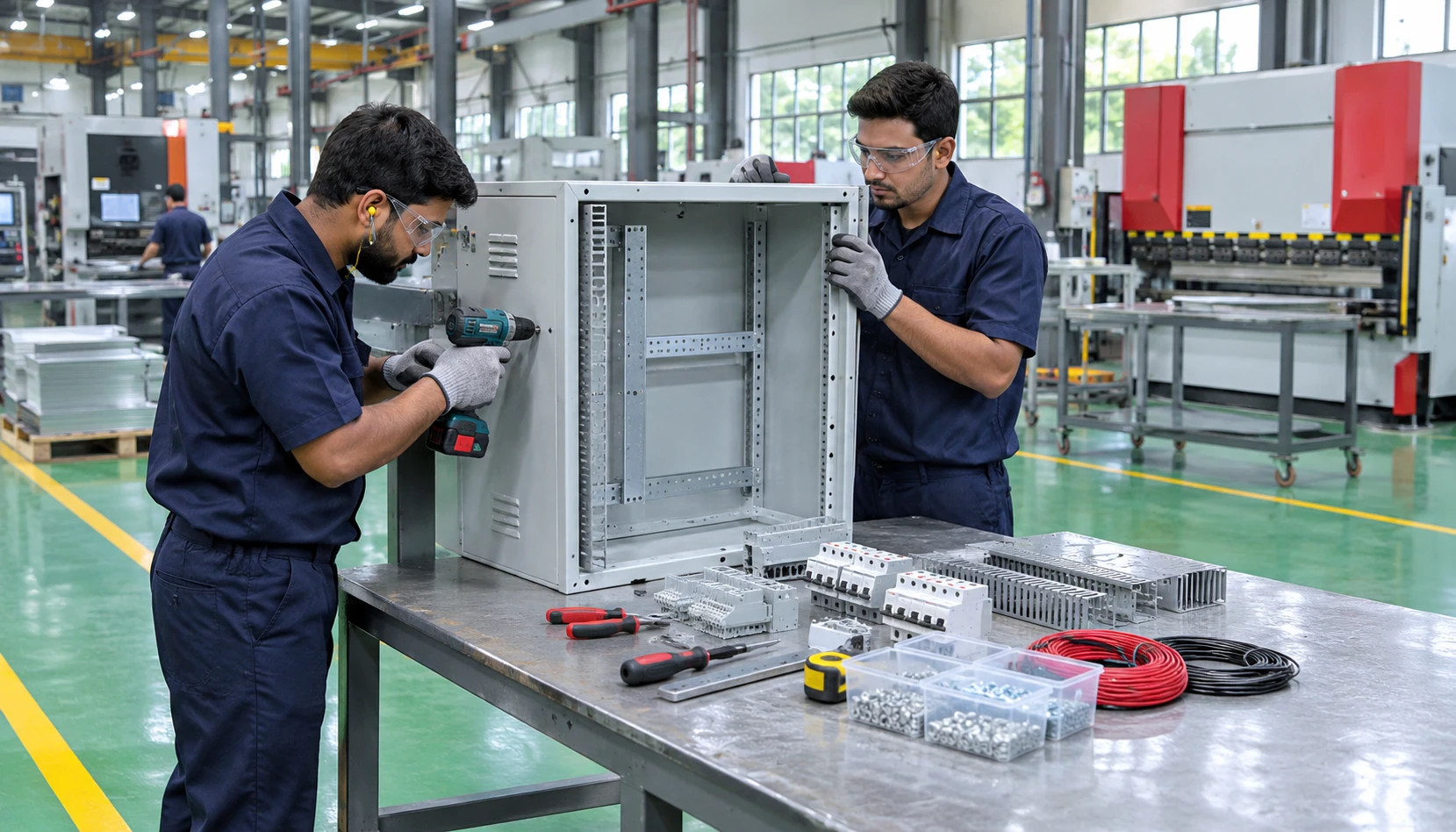
Sheet Metal Assembly
Assembly brings fabricated parts together into a finished unit.
Drawings guide component positioning and mounting details.
Fasteners, access points and interfaces are reviewed for suitability.
Cabinets, panels and equipment housings need coordinated assembly.
Fit, alignment and the agreed finish are checked before dispatch.
Discuss your component list, drawings and assembly scope with us.
Let’s review your manufacturing requirement.
Send your drawings, material preferences and quantity to our team.